Artist
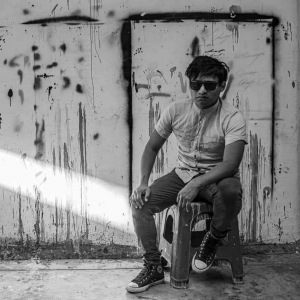
Marco Antonio Cruz "Chapu"
The painting of Marco Antonio Cruz, a scream in the middle of a peaceful night. On Tuesday, October 29, 1929, the greatest crash of the New York Stock Exchange occurred; with the Crash of '29 the Great Depression began, the great financial crisis that lasted throughout the 1930s, the years before the Second World War. It was the longest-lasting depression, the deepest, and the one that affected the greatest number of countries in the 20th century. A paradigm of the extent to which a severe deterioration of the economy can occur on a global scale.
Paradoxically, in 1929 the term abstract expressionism was used for the first time in art in the United States; afterward would come the Second World War with its millions of dead and a system of shattered beliefs. It would be President Franklin Delano Roosevelt who paid artists a salary so they could survive this crisis on the condition that they exhibit their works in public spaces; the Mexicans Diego Rivera, Siqueiros and Orozco were teachers of the American painters who enthusiastically took refuge in the teachings of the Mexicans.
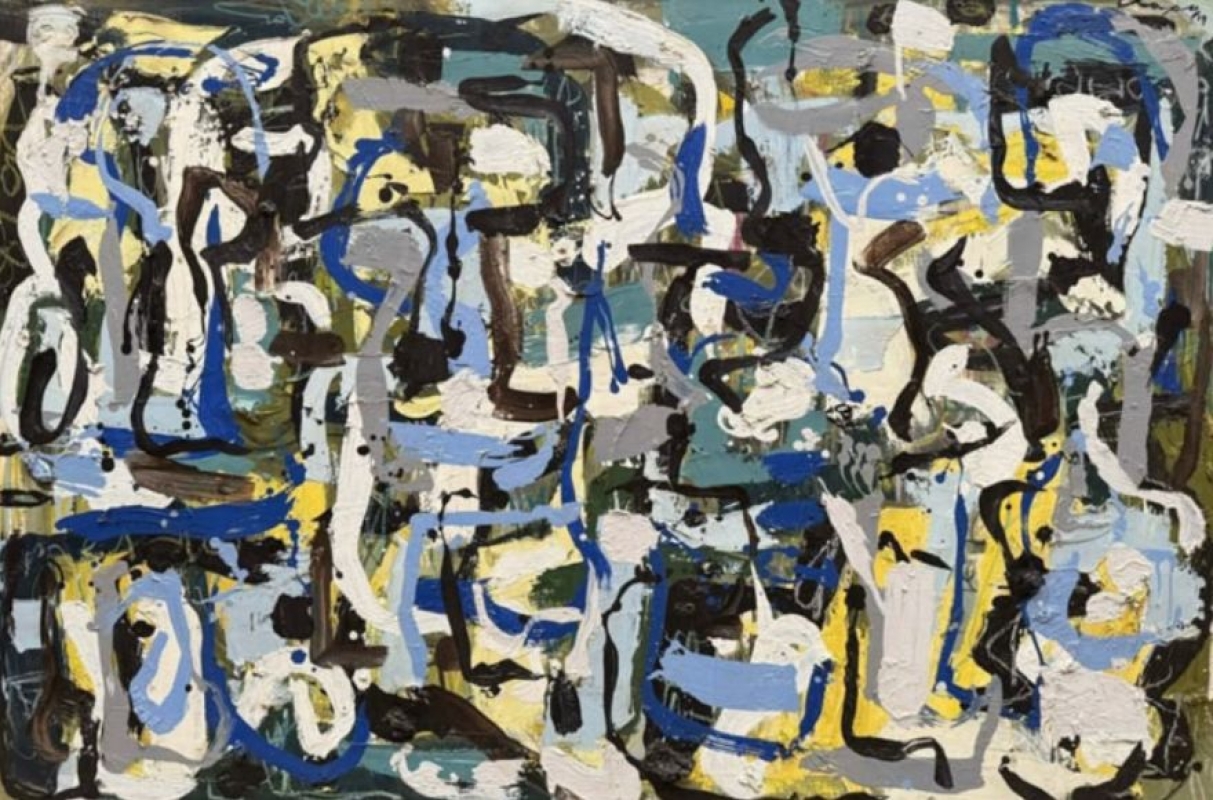
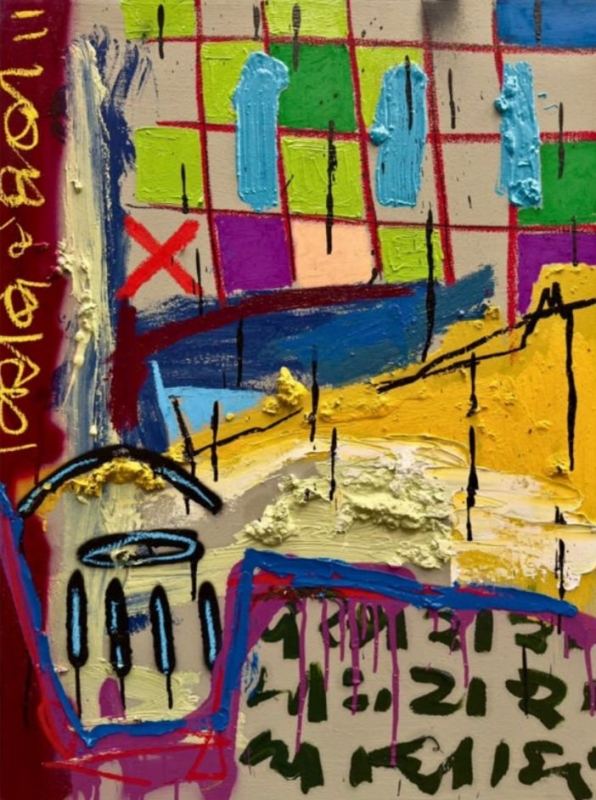
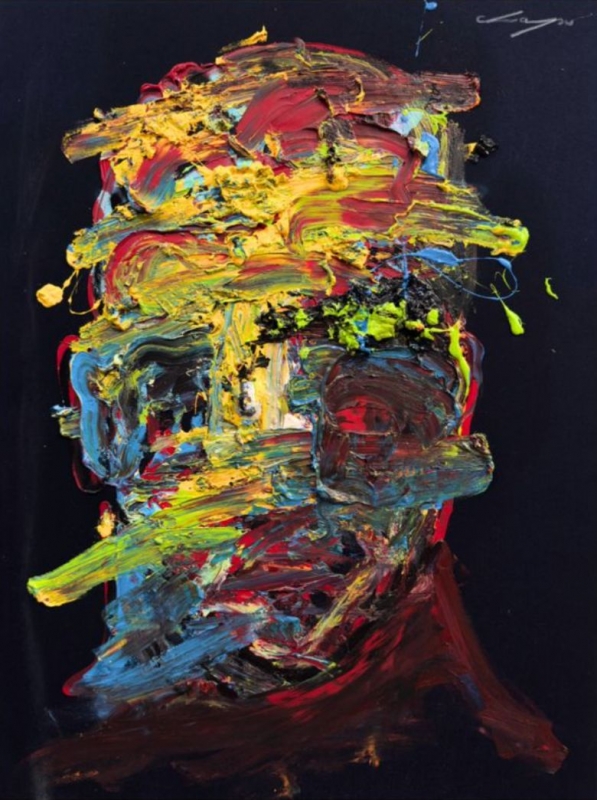
The breakdown of civilization that the Second World War represents, the decline of modern man, is reflected in abstract expressionism; dripping, matter painting, action painting and gesturality are its characteristics and reflect the discontent with reason and science.
The work before us today has these characteristics. Marco Antonio Cruz is a very young artist who takes up that paradigm in a world that has not changed course despite holocausts and the follies of civilization and progress. Marco Antonio's painting is powerful, chromatic, gestural, material and conceptual; it is a jolt in the lethargy of pretty painting, a scream in the middle of a peaceful night. The work we appreciate here is painted in a social and aesthetic atmosphere of tension; the creakings of the collapsing structure are shrill and deep in the collective subconscious, and the Chapu, as his friends call our painter, takes them up and hurls them onto the canvas.
Cruz has trained as the masters trained in the Renaissance, in workshops, watching and learning from the great ones. Almost a child, at the age of 15 he set foot as an assistant in the workshop of Alejandro Santiago, beginning his pilgrimage as an apprentice, with Amador Montes, Maximino Javier and others; hence the mastery with which he handles color and painting. Today he is mature and has already made the great leap; his vision of art stood out from his earliest works and its acceptance was immediate.
We are witnessing the consolidation of an artistic stance free of pose, the synthesis of form and color that dominates the canvas; the violent colors and thick impasto are the splendid results of an artist at the peak of his creativity.